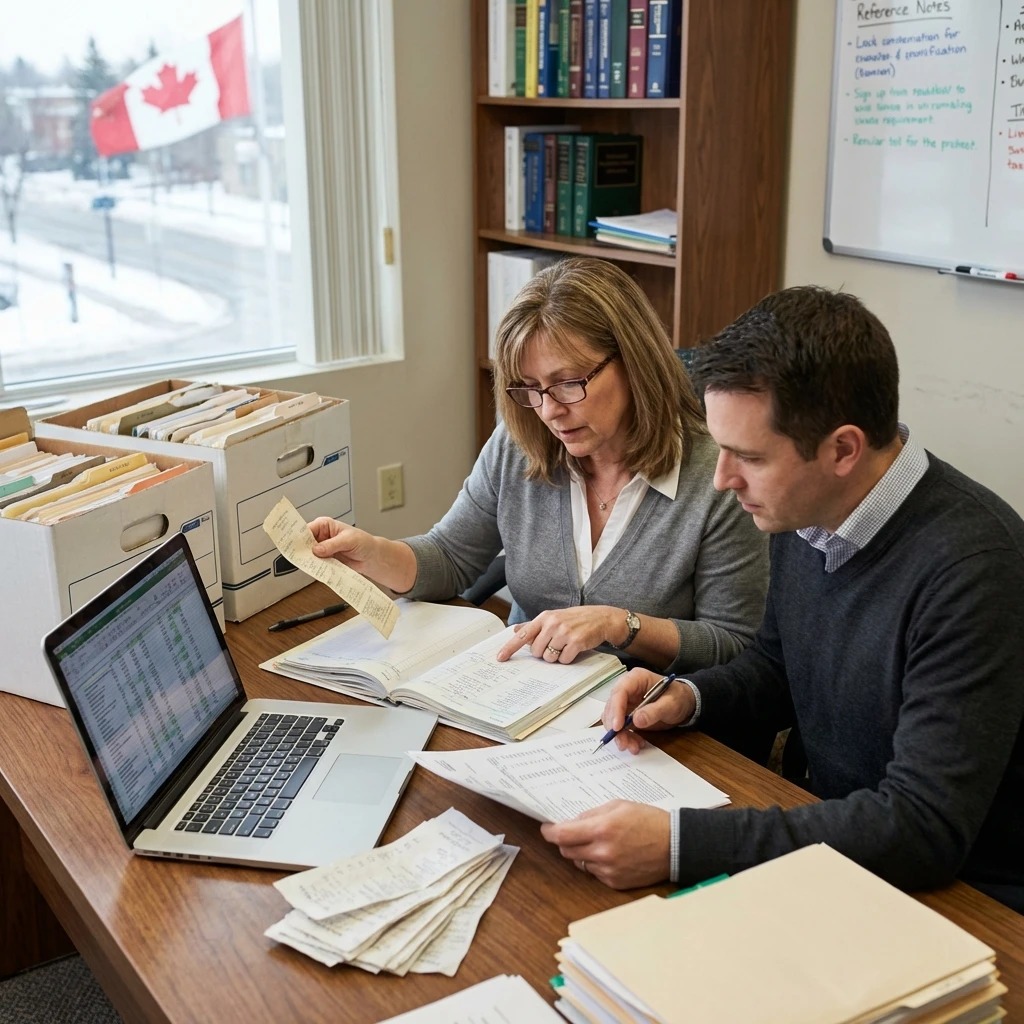
Corporate Tax Return Canada Help Calgary
Corporate Tax Return Canada Help in Calgary, Alberta often starts the same way, mid-week, between invoices and payroll, when you realize the corporate tax return canada deadline vibe is creeping in again and your files are scattered across email, cloud folders, and that one shoebox you swore you would deal with. Corporate Cleanup works with incorporated business owners to bring filings up to date, handle CRA back-and-forth, and get annual compliance back into a pattern that feels manageable, not like a yearly surprise attack.
If you are running a small company, you know the weird mix of confidence and dread that shows up around taxes, because you can run a job site, a sales call, or a client delivery just fine, but one missing slip or one unfiled year can turn into letters, holds, and long waits on the phone. There is usually a path out, and it is more about sequence and paperwork than luck, even when it feels personal.
So this is a walk through of what matters for a Canadian corporate return, what tends to go sideways, and how to get yourself to “filed, compliant, moving on” without making it your whole personality for the next month.
TL;DR (So What Are We Doing Here?)
- The challenge: corporate tax filings pile up fast when bookkeeping is behind, shareholders change, or CRA sends a notice you did not expect.
- Why it matters: late or missing corporate returns can trigger penalties, interest, and CRA follow-ups that slow down financing, grants, and even day-to-day banking.
- The common gaps: mixing up the corporate return with personal taxes, assuming “no activity” means “no filing,” and thinking CRA fixes things automatically once you pay.
- A clearer way to think about it: treat the return as an annual compliance package tied to your books, your GST/HST, and what you paid out as salary or dividends.
- Practical next steps: confirm which years are missing, rebuild clean books for each year, file T2 returns, respond to CRA requests with a plan, then set a repeatable annual process.
Corporate Tax Return Canada Help: The Real Tension
The stress is not the math, it is the uncertainty. One year you file on time, the next year you change accountants, switch bookkeeping tools, lose track of receipts, and suddenly you are unsure what CRA has on record, what you owe, and what is going to show up in the mail.
Here is the baseline that many top articles circle around: in Canada, a corporation files a T2 Corporation Income Tax Return for every tax year, even if there is no tax owing, and the due date is generally six months after the corporation’s fiscal year end, while any balance owing is typically due sooner depending on the situation. One small detail makes a big difference, because a fiscal year end is not always December 31, and that mismatch is where people drift. It happens.
Think of your filing stack like a snow drift on Deerfoot after a chinook, it looks fine until you hit it, then you are sideways, checking mirrors, trying to remember how you got there, and wishing someone had put up a sign earlier.
What Actually Goes Into a Canadian Corporate Return
A corporate return is a story told in numbers, and CRA expects the chapters to line up. That usually means financial statements (even if they are prepared from bookkeeping records), schedules inside the T2, and support for items like meals, vehicle use, shareholder loans, and capital asset purchases, all tied back to records you can show if asked.
Most current guides emphasize the big buckets: revenue, expenses, assets, and shareholder compensation, then they mention related filings that often travel with the same facts, like GST/HST returns, T4 slips for salary, and T5 slips for dividends. The return does not live alone, and that is why corporate tax return canada work feels simple in theory and messy in real life. One short email from CRA can turn into three fixes across three systems. That is normal.
Keep your year end in your calendar. Seriously.
The “Corporate Cleanup” Part: Catching Up Without Guessing
Catching up is less heroic than people imagine, and more like careful sorting. You figure out which years are unfiled or need adjustment, you get bookkeeping to a state where it matches bank and credit card activity, and you document decisions like “this was a shareholder advance” or “that purchase was equipment,” so the file makes sense to someone who was not there.
A lot of the top ranking content talks about penalties and interest in broad terms, but the practical issue is time: CRA review cycles, phone queues, and the drag of missing documents. When you are behind, the cleanest approach is usually year-by-year, because each T2 return depends on opening balances from the prior year, and messy openings make messy everything. Small companies feel this fast when they want a mortgage letter, a lease, or a line of credit and someone asks for filed returns. Paperwork has a way of becoming a gatekeeper.
This is where corporate tax return canada help becomes more about process than tips.
Calgary Factors: What Changes When You Are Filing Here
Alberta does not have a provincial sales tax, so many Calgary owners get used to GST and forget how many corporate records still have to line up, even without PST. That sounds small, but it changes how you track what you collected, what you claimed as input tax credits, and how you explain differences between your GST filings and your income statement.
You also see a lot of incorporated contractors and project-based businesses in Calgary, and that can mean uneven income, more vehicle and tool purchases, and more subcontractor payments that need support. If you were at the Stampede and someone told you their best business system is “my truck console,” you have seen the origin story of a future cleanup file, because receipts fade, apps change, and memory does not count as a record. CRA wants documents that match the numbers. Fair enough.
At this point, corporate tax return canada becomes less of a once-a-year task and more of a year-round habit you either build or borrow.
Choosing Support: DIY, Accountant, or Corporate Cleanup?
There is a decision moment that shows up in almost every well-read corporate tax article: do you file yourself, hire an accountant, or get targeted help for catch-up and CRA communications. The right answer depends on how current your books are, whether any years are missing, and how comfortable you feel responding to CRA questions without spiraling into twenty tabs and a headache.
Here is a simple comparison that matches what business owners usually weigh:
| Option | When it fits | What you still need | Where it can pinch |
|---|---|---|---|
| DIY software filing | Books are clean, one corporation, no complications | Accurate bookkeeping, schedules, record retention | Easy to miss schedules, easy to misclassify items |
| Traditional accounting firm | Annual filing rhythm, steady records | Timely documents, clear answers, budget | Less suited to messy multi-year catch-up without extra work |
| Corporate Cleanup style support | Behind on filings, CRA letters, messy records, multiple years | Willingness to gather records and answer questions | Takes focused effort to rebuild year-by-year |
Some people start DIY and then switch once a notice arrives, others start with a pro because they want the file to stand up to questions, and plenty of folks mix it, bookkeeping help plus tax filing help, depending on the year. One path is not morally better. It is just tradeoffs.
If you want a gut-check: when corporate tax return canada issues are tied to missing years, shareholder loan confusion, or CRA back-and-forth, “more structure” tends to beat “more hustle.”
Filing, Talking to CRA, Staying Sane
Once you file, CRA may assess right away, or they may ask for support, and that is where a tidy response package helps. Keep copies of what you sent, track dates, and treat every CRA letter like a task with a deadline, not a vibe, because delays can stack into interest and more follow-up.
After things are current, staying current is mostly boring work done on purpose: monthly bookkeeping reviews, keeping receipts in one place, tracking shareholder draws, and deciding early whether you pay yourself by salary or dividends so slips line up at year end. A small quirky truth here: the best filing system I have seen in a Calgary shop was a labeled accordion folder living beside a jar of those pink winter windshield washer tablets, and it worked because it stayed put and everyone used it.
That is the shape of it, and corporate tax return canada stops feeling like a cliff when you turn it into a calendar.
Key Takeaways (No Spreadsheets Were Harmed)
- A corporation in Canada generally needs to file a T2 return every year, even when tax owing is zero.
- Deadlines tie to your fiscal year end, not your personal tax timeline.
- Catching up works best year-by-year, because balances roll forward.
- CRA communication goes smoother when your numbers match your records and your responses follow a clear timeline.
- The best support choice depends on book cleanliness, missing years, and how much CRA follow-up is in play.
Once you see corporate filing as a chain of connected steps, the stress starts to make sense, because the weak link is usually bookkeeping, missing documents, or a year end that drifted without anyone noticing. Getting current is often a sequence: confirm missing years, rebuild the books, file the T2s, answer CRA, then set a repeatable routine so the pile does not come back. Calgary business life moves fast, and it is easy to leave compliance stuff for later until later starts charging interest. If you are dealing with catch-up filings, CRA letters, or a company that feels disorganized on paper, it can help to hand the sequence to someone who does this work every day. When you are ready, you can Contact Corporate Cleanup and get help sorting out the next right step.