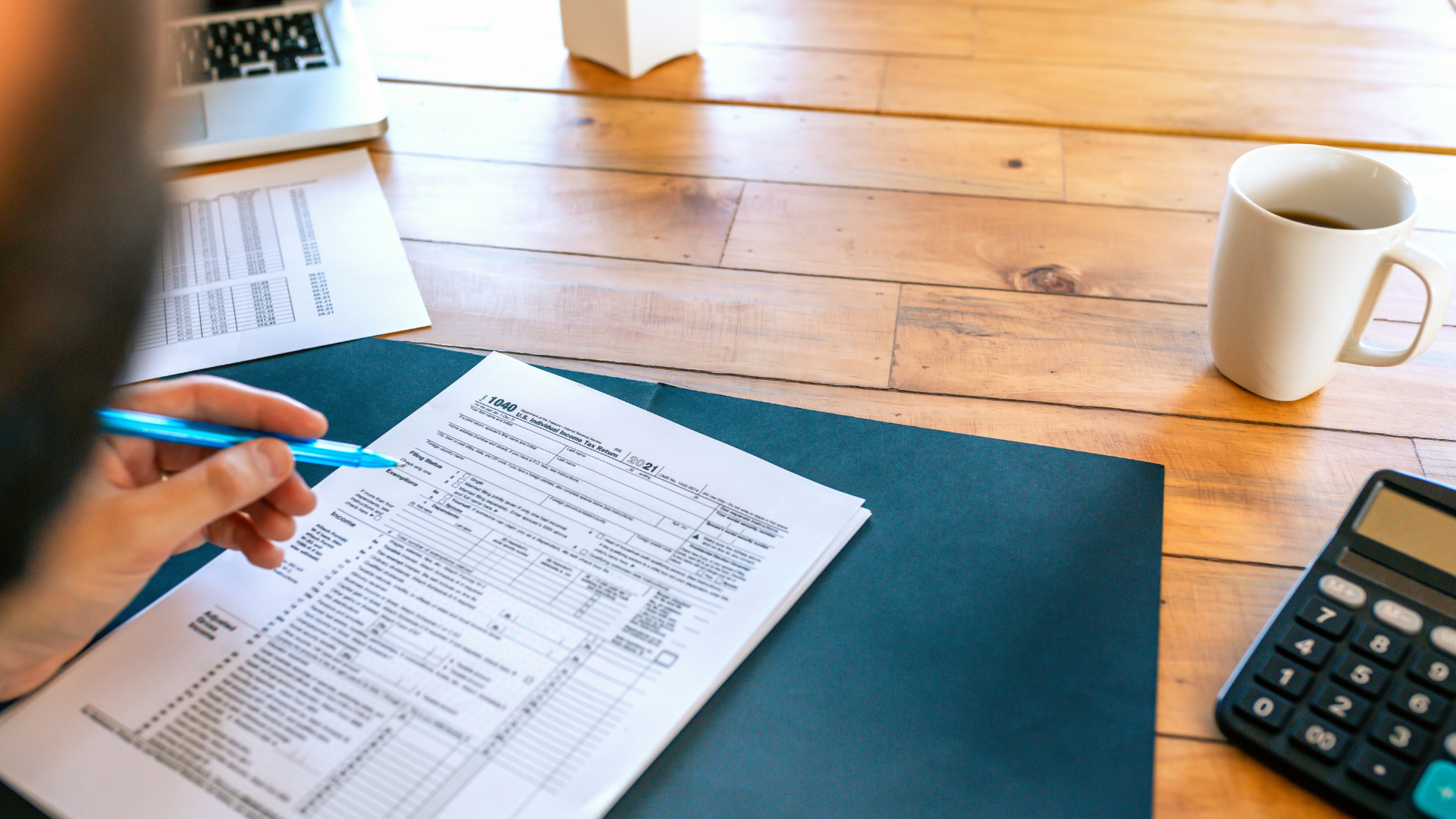
Calgary Businesses: Avoid Late Corporate Tax Penalties
When you start to notice the penalty for filing taxes late showing up in your corporate life, it rarely arrives like a polite calendar reminder. It usually shows up after a stretched week, a half-finished set of books, a CRA notice that makes your coffee taste weird, and a creeping sense that you are one missed email away from a bigger mess. Corporate Cleanup works with incorporated business owners to bring filings up to date, deal with CRA back and forth, and get annual compliance back into a shape that lets you get on with running the company.
If you are in Calgary, you know how fast the year can get away from you. One minute you are handling clients, payroll, and GST/HST, the next minute you are staring at a corporate year end that passed a while ago, wondering what the CRA is going to do with a return that is late, missing, or both. This stuff is normal in the sense that it happens a lot, but it still feels personal when you are the one holding the envelope.
There is a way to look at late corporate returns that keeps you calm and still gets things done, because the rules are knowable, the steps are straightforward, and the fixes tend to work best when you move in order instead of in panic.
TL;DR: The late-filing mess, in plain words
- The challenge: Corporate tax returns (T2) get missed, filings stack up, and CRA notices start landing.
- Why it matters: interest can add up daily, penalties can apply in specific situations, and late filing can block financing, contracts, and clean year end planning.
- Common gaps: mixing up “owing tax” with “owing a return,” assuming “no activity” means “no filing,” and waiting for CRA to calculate everything for you.
- A clearer way to think: separate filing deadlines from payment deadlines, confirm whether tax is owing, then handle CRA communication with a paper trail.
- Practical next steps: find the last filed year, list missing returns, gather bookkeeping records, estimate any balance due, file in order, and deal with CRA arrears in writing.
Why the penalty for filing taxes late feels random
Late corporate tax trouble can feel like stepping on a rake you forgot you left in the yard. The CRA has set deadlines, but the consequences depend on your facts, and those facts change the minute you have a balance due, a prior late filing history, or missing years that make CRA attention more likely. That is why two companies can both be late and have totally different outcomes, and why “my buddy did nothing and nothing happened” is not a plan.
Here is the part that trips people up: for Canadian corporations, a T2 corporate income tax return is due within 6 months after the corporation’s fiscal year end, but any balance owing is generally due earlier, often 2 or 3 months after year end depending on the corporation’s situation. One date is about reporting. The other date is about paying. Miss the payment date and interest starts running, compounded daily, and it keeps going until the balance is paid. That interest is not a vibe. It is math.
What CRA actually charges, and when
Penalties show up most predictably when tax is owing and you file late. The CRA’s common late filing penalty for corporations in that case is 5 percent of the unpaid tax at the filing due date, plus 1 percent of that unpaid tax for each full month the return is late, up to 12 months. If the corporation was assessed a late filing penalty in any of the previous three tax years, and CRA sent a formal demand to file, the penalty can jump to 10 percent plus 2 percent per full month late, up to 20 months. Short sentence, big impact.
Interest is a separate track. It applies on unpaid tax, and it can apply on penalties too, and CRA interest is set quarterly and compounds daily, which means time is doing pushups in the background while you are trying to find last year’s bank statements. If you are trying to get your head around the penalty for filing taxes late, start by asking one practical question: was there tax owing at the due date, or not? That one detail changes the whole bill.
The Calgary twist: real life gets in the way
Calgary businesses run on calendars that do not care about T2 deadlines. Stampede week happens, crews are on sites, trucks need repairs, your bookkeeper goes on vacation, and suddenly you are in September looking at a year end that was in March, and the return is still a “next week” task. It happens.
A useful frame is to treat your corporation like a house with a furnace filter. Ignore it long enough and the system still runs, but it starts working against you, airflow drops, and the fix gets pricier and more annoying than it had to be. The penalty for filing taxes late tends to land hardest when bookkeeping is behind, because you cannot file cleanly if the records are a shoebox situation, and you cannot negotiate confidently with CRA if you do not know what you owe.
A simple timeline that keeps you out of trouble
Late filing becomes manageable when you put it on rails. Start with dates, then documents, then filing, then payment and CRA follow-through, because switching the order usually creates extra calls, extra reassessments, and extra stress.
Here is a timeline that matches how corporate tax services often tackle this in the real world:
| Step | What you do | Why it matters |
|---|---|---|
| 1. Confirm year ends | List each fiscal year end and what is filed | You cannot fix what you cannot name |
| 2. Identify missing T2s | Compare to CRA account info if available | Missed years stack penalties and attention |
| 3. Gather records | Bank, sales, expenses, payroll, GST/HST | Clean inputs reduce reassessments |
| 4. Prepare financials | Bookkeeping to a complete year end | Filing without cleanup invites trouble |
| 5. File in order | Oldest year first | CRA processing and carryforwards work better |
| 6. Plan payment | Pay tax owing and address arrears | Interest stops when the balance is paid |
This is where Corporate Cleanup’s “cleanup” idea matters, because filing is not just clicking submit, it is getting the company organized enough that the filing matches reality and stays stable after CRA reviews it.
“But my corp had no activity” and other traps
Some incorporated owners assume that if the corporation did not do much, the return does not matter. CRA still expects a T2 return for a corporation for each tax year, even with no tax owing, and the longer you leave gaps, the more likely you end up spending time proving something that would have been obvious with a filed return. One line filed on time can beat a thick package filed three years late.
Another trap is waiting for CRA to “tell you what you owe” before you act. CRA can assess based on what they have, and if they do not have your return, they can still move the file forward in ways that are not fun to unwind. If the penalty for filing taxes late is already on your mind, act like time matters, because daily compounding interest is a small leak that can fill a bathtub.
Near the end of these projects, there is often a moment where someone finds a forgotten T4 summary or a USB stick labeled “Taxes 2021 FINAL FINAL,” which is peak small business energy, and also a sign you are close to done.
The fix that sticks, and where to start
The best starting point is boring: find your last filed corporate year, then list what is missing, then decide whether you need bookkeeping cleanup before filing. If CRA has contacted you, keep everything in writing where you can, note dates and names, and avoid guessing on the phone when you do not have the numbers in front of you. A clean set of filings tends to reduce follow-up, while rushed filings tend to create a second round of work.
If you want help, Corporate Cleanup fits when you need corporate tax services that cover the full loop, getting returns caught up, handling CRA communication, and setting up a system so next year does not turn into the same movie again. The penalty for filing taxes late is painful, but the bigger win is getting back to where you can plan instead of react.
Key Takeaways That Keep Your T2 Sane
- A T2 return is due 6 months after year end, but payment is usually due earlier, often 2 or 3 months after year end.
- CRA late filing penalties often apply when there is unpaid tax at the filing due date, and repeat late filing can raise the penalty.
- CRA interest compounds daily on unpaid amounts, and time becomes a cost.
- “No activity” does not automatically mean “no filing,” so confirm what your corporation owes for compliance.
- Filing in order, with cleaned-up records, usually reduces CRA back and forth.
- If the penalty for filing taxes late is already in play, stop the bleeding by confirming balances and getting filings submitted.
Once you see the moving parts, this stops feeling like mystery math and starts feeling like admin you can close out. You do not need perfect memory or a magic spreadsheet, you need dates, records, and a filing plan that goes oldest to newest. Calgary business life stays busy, and the goal is not to become a tax hobbyist, it is to keep your corporation compliant so you can focus on clients and cash flow. If you are already behind, getting current tends to feel like clearing a blocked lane on Deerfoot, things move again once the pileup is gone. If you want a hand sorting filings, CRA letters, and ongoing compliance, you can Contact Corporate Cleanup and get the next steps lined up.